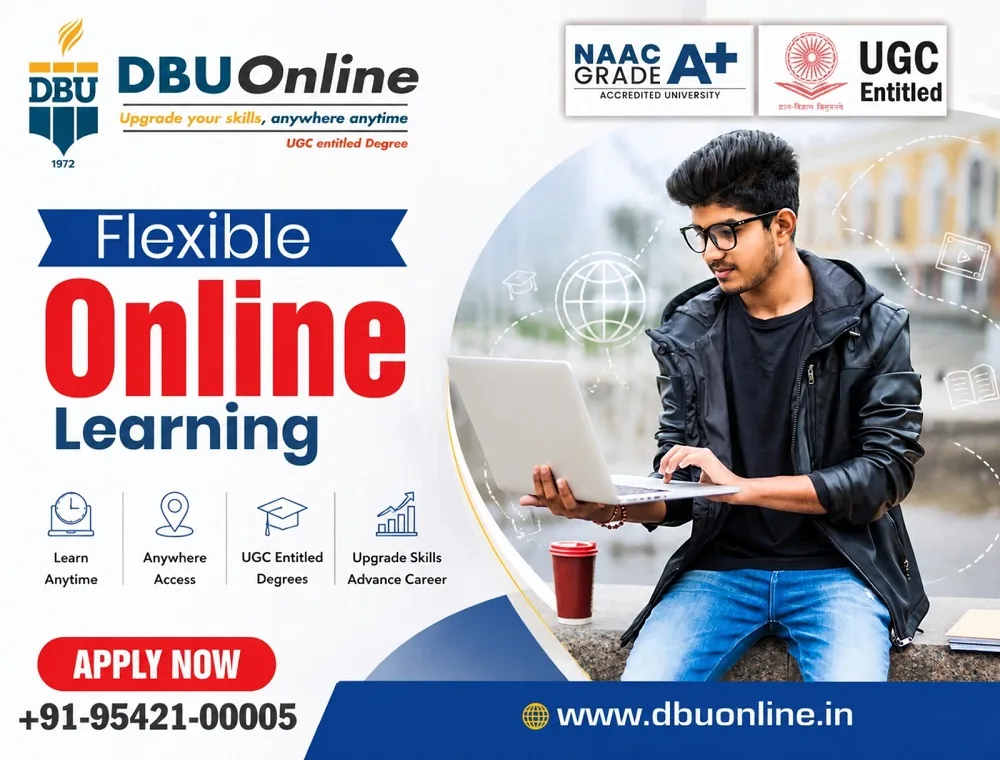
Flexible online learning is changing how students study and build their careers. It allows learners to study through online classes, digital resources, recorded lectures, and other online learning tools. Students can manage their studies along with work, family, or other responsibilities. This makes online education a useful choice for students who need more control over their study time.
At DBU Online, we understand that every learner has different needs. Our online learning approach helps students continue their education while managing their daily schedules. With the right course, regular study plan, and access to digital learning resources, students can work towards their academic and career goals from a convenient location.
What is Flexible Online Learning?
Flexible online learning is a method of education that gives students more freedom over when, where, and how they study.
Instead of attending classes at a fixed physical location every day, students can access learning resources through an online platform. Depending on the course and academic schedule, learners may use online classes, recorded content, study materials, assignments, assessments, and other digital resources.
The main idea is simple: education can fit into a student’s schedule more easily.
For example, a working professional may study after work, while another student may choose to study during the morning or evening. This flexibility can make it easier to continue higher education without completely changing an existing routine.
How Does Flexible Online Learning Work?
Flexible online learning usually combines technology with structured academic support.
A typical online learning experience may include:
- Online lectures and classes
- Digital study materials
- Recorded learning resources, where provided
- Online assignments
- Academic guidance
- Learning management systems
- Communication with faculty and academic teams
- Online access to course information
Students still need to follow the academic requirements of their programme. Flexibility does not mean that there are no deadlines or academic responsibilities.
Instead, it gives learners more convenience in managing their study time within the programme structure.
Benefits of Flexible Online Learning
1. Study According to Your Schedule
One of the biggest benefits of flexible online learning is better time management.
Students can plan their study hours around their daily responsibilities. This can be especially useful for working professionals, parents, entrepreneurs, and students with other commitments.
2. Learn From a Convenient Location
Online learning reduces the need to travel to a physical classroom every day. Students can access their learning environment from a suitable location with the required internet connection and device.
This can save travel time and make education more convenient.
3. Balance Work and Education
Many working professionals want to improve their qualifications but find it difficult to attend regular classroom programmes.
Flexible online education can help them manage both work and studies. They can create a study routine that works with their professional schedule.
4. Better Time Management
Online learning requires students to plan their time. They can divide their week between classes, assignments, revision, work, and personal responsibilities.
This can also help develop useful skills such as:
- Time management
- Self-discipline
- Planning
- Digital communication
- Independent learning
5. Access Digital Learning Resources
Online programmes use digital learning methods. Students may get access to course materials and other academic resources through online platforms.
Digital access can make it easier to review learning content and stay connected with academic activities.
6. Continue Learning While Working
A student does not always have to choose between professional work and higher education.
Flexible online learning can provide an option for people who want to continue their studies while working. It can be useful for professionals who want to gain additional knowledge or improve their qualifications.
7. Convenient Learning Experience
For many students, convenience is an important reason to choose online education.
There is less dependence on daily travel to campus, and learners can organize their study routine according to their circumstances.
Flexible Online Learning for Working Professionals
Working professionals often have limited time for education. A fixed classroom schedule may not always fit their work commitments.
Flexible online learning can help professionals create a better balance between their career and education.
For example, a professional can:
- Complete work during regular office hours.
- Attend online academic activities according to the programme schedule.
- Use available digital learning resources for revision.
- Complete assignments within the given deadlines.
- Plan weekly study hours.
- Prepare for assessments in advance.
The key is to follow a regular study routine.
Flexible Online Learning for Students
Flexible online learning can also benefit students who want more control over their daily routine.
Students may have internships, part-time work, competitive exam preparation, family responsibilities, or other commitments. Online education can give them a learning option that is more adaptable to their routine.
However, students should understand that flexibility also requires responsibility. Regular study, assignment completion, participation, and preparation are important for academic progress.
Online Diploma, UG and PG Programmes at DBU Online
DBU Online offers Diploma, Undergraduate (UG), and Postgraduate (PG) programmes for learners seeking flexible online education. Students can choose a programme based on their qualification, interests, and career goals.
Online Diploma Programmes
| Course | Full Name |
| DCA | Diploma in Computer Applications |
| DLIS | Diploma in Library and Information Science |
| DBA | Diploma in Business Administration |
Online Undergraduate (UG) Programmes
| Course | Full Name |
| BBA | Bachelor of Business Administration |
| B.Com | Bachelor of Commerce |
| BA | Bachelor of Arts |
Online Postgraduate (PG) Programmes
| Course | Full Name |
|---|---|
| MBA | Master of Business Administration |
| MCA | Master of Computer Applications |
| M.Com | Master of Commerce |
| MA English | Master of Arts in English |
| MA History | Master of Arts in History |
| MA Political Science | Master of Arts in Political Science |
| MJMC | Master of Arts in Journalism & Mass Communication |
| M.Lib | Master of Library and Information Science |
These online Diploma, UG, and PG courses offer flexible study options for learners with different academic and career goals. Students should check the latest eligibility, course duration, admission requirements, and programme details before applying.
Is Flexible Online Learning Good for Career Growth?
Yes, flexible online learning can support career growth when students choose a suitable programme and complete it successfully.
Higher education can help learners develop subject knowledge and professional skills. An online programme can also allow working professionals to continue learning without taking a complete break from their careers.
The value of an online programme depends on factors such as:
- Programme relevance
- Recognition and applicable regulations
- Curriculum
- Learning support
- Academic quality
- Student commitment
- Practical and professional skills gained
Students should always check the current eligibility, recognition, programme structure, and admission requirements before enrolling.
How to Make Flexible Online Learning Successful
Flexibility is useful, but students need a good study plan.
Create a Weekly Study Schedule
Set specific hours for learning every week. A fixed routine can help you stay consistent.
Set Small Study Goals
Instead of trying to complete everything at once, divide your work into smaller tasks.
For example:
- Monday: Read one topic
- Tuesday: Watch or attend learning sessions
- Wednesday: Revise notes
- Thursday: Complete an assignment
- Friday: Review important concepts
Avoid Last-Minute Work
Do not wait until the deadline to complete assignments or prepare for assessments. Early preparation can reduce stress.
Stay Connected With Academic Support
Use the available academic resources and communication channels when you need help.
Keep Your Learning Space Ready
Choose a quiet and comfortable place for study. Keep your laptop or other required device, internet connection, books, and notes ready.
Admission Process
| Step | Admission Process |
|---|---|
| 1 | Choose your bachelor’s programme |
| 2 | Check eligibility |
| 3 | Apply online |
| 4 | Generate DEB ID & upload documents |
| 5 | Pay applicable fees |
| 6 | Complete document verification & get admission confirmation |
Who Can Choose Flexible Online Learning?
Flexible online learning may be suitable for:
- Working professionals
- College graduates
- Students looking for convenient higher education
- Entrepreneurs
- Parents and caregivers
- Professionals seeking additional qualifications
- Learners who prefer digital education
- Students who need a more adaptable study routine
The right choice depends on the learner’s academic goals, programme eligibility, schedule, and career plans.
Flexible Online Learning vs Traditional Classroom Learning
| Feature | Flexible Online Learning | Traditional Classroom Learning |
| Learning location | Online | Physical campus |
| Schedule | More flexible within programme rules | Usually fixed |
| Travel | Usually less travel | Regular campus travel |
| Digital resources | Central part of learning | May be used along with classroom teaching |
| Time management | More student responsibility | More structured timetable |
| Suitable for working professionals | Can be convenient | May be difficult with fixed schedules |
| Learning style | Digital and independent | Classroom-based and face-to-face |
Both methods have their own advantages. Students should choose the format that matches their learning needs and personal situation.
Flexible Online Courses
At DBU Online, we offer online education options designed to support learners who want to continue their higher education through a digital learning environment.
Our online programmes can be useful for students and working professionals who want a more convenient way to manage their education.
Before choosing a programme, students should review the course details, eligibility criteria, duration, admission requirements, curriculum, and other applicable academic information.
The right programme should match your educational background and career goals.
How to Choose the Right Flexible Online Course
Choosing an online course is an important decision. Consider these points before applying:
| Factor | What to Check |
|---|---|
| Eligibility | Check whether you meet the academic eligibility requirements. |
| Curriculum | Review the subjects and topics covered in the programme. |
| Programme Duration | Check the course duration and plan your study schedule. |
| Learning Support | Review the academic and student support available. |
| Career Goals | Choose a programme that supports your long-term career plans. |
| Academic Requirements | Check classes, assignments, examinations, deadlines, and other programme requirements. |
Flexible Online Learning: Key Points at a Glance
| Question | Answer |
| What is flexible online learning? | It is an online education method that gives learners more flexibility in managing their study routine. |
| Can working professionals study online? | Yes. Online learning can be a convenient option for professionals managing work and education. |
| Can students study from home? | Online learning allows students to access academic resources from a convenient location, subject to programme requirements. |
| Is online learning completely self-paced? | Not always. Programme schedules, classes, assignments, and assessments may have specific requirements. |
| Does flexible learning require discipline? | Yes. Students need good time management and regular study habits. |
| Is flexible online learning useful for career development? | It can support career development by helping learners continue higher education and build relevant knowledge and skills. |
Conclusion
Flexible online learning gives students more freedom to manage their education around their daily lives. It can be useful for working professionals, graduates, and learners who want a convenient digital learning experience.
The most important part is to choose the right programme and maintain a regular study routine. Flexibility works best when it is combined with discipline, planning, and consistent effort.
At DBU Online, we aim to provide a convenient online learning environment for students who want to continue their higher education. Explore our online programmes, check the applicable eligibility requirements, and choose a programme that supports your academic and career goals.
Frequently Asked Questions
What is flexible online learning?
Flexible online learning is an education method where students use online platforms and digital resources to study while managing their learning around their daily responsibilities.
What are the main benefits of flexible online learning?
The main benefits include better time management, less travel, convenient access to learning resources, and the ability to manage education alongside work or other responsibilities.
Is flexible online learning suitable for working professionals?
Yes. It can be suitable for working professionals because online education can provide greater flexibility than a traditional fixed classroom routine.
Can I study online while working full-time?
Yes, many working professionals choose online education to continue their studies while working. However, you should check the programme schedule and make sure you can meet all academic requirements.
Is flexible online learning completely self-paced?
No. Flexibility does not necessarily mean that everything is self-paced. Online programmes may have fixed classes, assignment deadlines, examinations, and other academic requirements.
How can I manage my time in online learning?
Create a weekly study schedule, set small goals, complete assignments early, and maintain a regular learning routine.
Is flexible online learning good for students?
It can be a good option for students who want a convenient learning format and can manage independent study effectively.
How do I choose a flexible online course?
Check the eligibility, curriculum, duration, academic support, programme requirements, and how well the course matches your education and career goals.